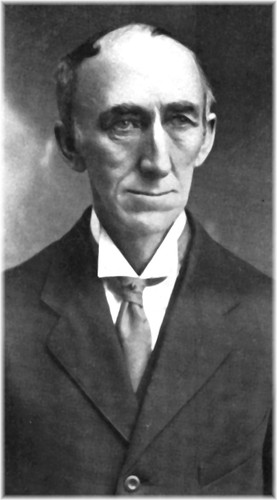
Wallace Delois Wattles was born in 1860 in Illinois. He spent much of his life studying the works of philosophers — among them Emerson and Hegel — and became a committed figure within the New Thought movement, a current of thought that also included James Allen, Prentice Mulford, and Orison Swett Marden. Working with editor and writer Elizabeth Towne, Wattles channelled decades of reading and reflection into a body of practical writing aimed at a single, direct purpose: helping ordinary people achieve prosperity.
His central work, The Science of Getting Rich, published in 1910, argued that wealth followed learnable principles rooted in creative thought rather than competition. Written in seventeen concise chapters, it laid out a method for aligning thought with desired outcomes. Two companion volumes — The Science of Being Great and The Science of Being Well — extended the same framework into character and health, forming what became known as his Science Trilogy. The three books together represent the full architecture of his thinking.
Wattles died in 1911, the year after his most important work appeared. His writing remained in circulation in specialist self-help and New Thought communities for most of the twentieth century before reaching a far wider audience when Rhonda Byrne cited The Science of Getting Rich as a primary source for her 2006 book The Secret. That attribution returned Wattles to print in numerous editions worldwide. His three core books remain continuously available.
The Science of Getting Rich
The 1910 classic that inspired The Secret — a precise, systematic account of how thought creates material reality. Certain laws, as definite as the laws of algebra, that anyone can apply.