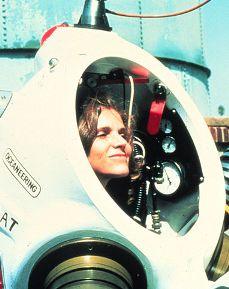
Sylvia Earle was born in 1935 in Gibbstown, New Jersey, and grew up on the Gulf Coast of Florida, where the sea became the organising fact of her life. She studied at Florida State University and earned her doctorate in phycology from Duke University in 1966. Her early research centred on marine algae and led to expeditions that established her as a rigorous field scientist at a time when the ocean's interior remained largely unmapped. She later served as chief scientist of the National Oceanic and Atmospheric Administration.
In 2009, Earle was awarded the TED Prize, and her wish — to create a global network of marine protected areas — became the founding charge of Mission Blue. The organisation identifies critical ocean zones as Hope Spots and builds public support for their protection through documentary film, scientific expeditions, social media, and partnerships with more than two hundred conservation groups worldwide. The Netflix documentary Mission Blue, released in 2014, carried her decades of accumulated observation to a broad international audience and sharpened attention to the scale of ocean degradation.
Earle has continued to lead Mission Blue expeditions and public campaigns well into her ninth decade, diving regularly and testifying before governments and institutions on the urgency of marine protection. The Hope Spots network continues to grow, proposing that at least thirty per cent of the ocean requires formal protection to reverse the losses that industrial fishing, pollution, and warming have compounded over the past half-century. Her work now lives in both the mapped coordinates of Hope Spots and the sustained global coalition that Mission Blue has assembled around them.
Mission Blue
The legendary oceanographer's foundation working to protect ocean Hope Spots worldwide.