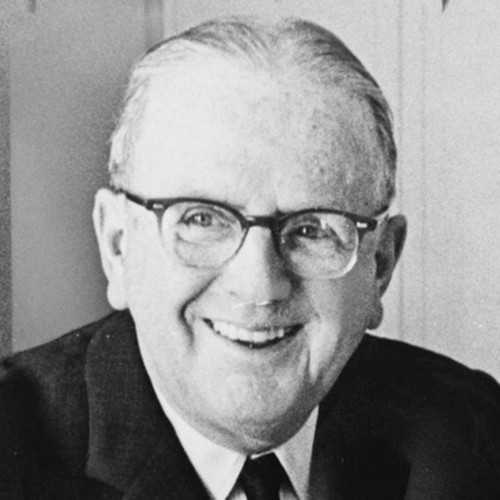
Norman Vincent Peale was raised in a Methodist household and ordained as a Methodist minister in 1922. He changed his affiliation to the Reformed Church in America in 1932, taking the pulpit at Marble Collegiate Church in Manhattan for what became a 52-year tenure. The congregation grew under him from 600 to over 5,000 members, and Peale became one of the city's most prominent preachers, building a ministry centred on the practical application of faith.
Alongside psychoanalyst Smiley Blanton, Peale established a religio-psychiatric outpatient clinic beside the church; together they co-authored Faith Is the Answer in 1940, alternating chapters across the religious and psychiatric disciplines. He launched the radio programme 'The Art of Living' in 1935, edited the magazine Guideposts, and later extended into television. The Power of Positive Thinking distilled his core method — faith deployed as daily technique — into a phenomenal bestseller that installed 'positive thinking' as a widespread cultural phrase. Mental health experts did not accept the ideas it contained.
In 1951 the clinic grew into the American Foundation of Religion and Psychiatry, with Peale as president and Blanton as executive director. The radio programme 'The Art of Living' ran for a total of 54 years, and Guideposts reached a broad readership as a regularly issued magazine. The Power of Positive Thinking established 'positive thinking' as a durable cultural phrase; the framework it set out — faith applied as practical daily method — continued to reach readers across multiple generations.
The Power of Positive Thinking
The 1952 classic that launched the positive thinking movement — practical techniques for faith, confidence, and serenity.