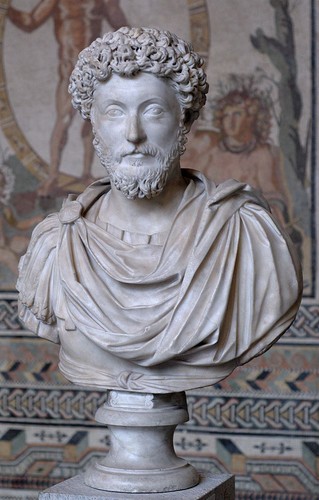
Marcus Aurelius served as Roman Emperor from 161 to 180, initially sharing rule with his co-emperor Lucius Verus until Verus' death in 169. He is counted among the last of what historians call the Five Good Emperors. His Stoic convictions shaped how he approached the exercise of power, and the tensions of a reign marked by military conflict on multiple fronts proved inseparable from the philosophical questions he returned to in private. It was this combination — of obligation and reflection — that produced his most enduring work.
His reign saw the empire push back a revitalised Parthian Empire — his general Avidius Cassius sacked the capital Ctesiphon in 164 — and brought sustained engagement in the Marcomannic Wars against the Marcomanni, Quadi, and Sarmatians. Alongside these campaigns, between 170 and 180, Aurelius composed Meditations in Greek while in the field: a private record of Stoic reflection on duty and the obligations of power. The text was not written for publication; its survival made it one of the most studied accounts of rule lived from the inside.
A revolt by Avidius Cassius in the east failed to consolidate and was quickly suppressed, though the threat of Germanic tribes on the empire's frontiers remained unresolved at the close of his reign in 180. Meditations — written in Greek on campaign, with no apparent intention of publication — has remained in continuous reading since. It is now revered as a monument to government by service and duty, and as evidence that the Platonic ideal of the philosopher-king could, at least once, be approximated in practice.
Meditations
The Roman emperor's private journal — Stoic philosophy at its most intimate and enduring. A daily companion for 2,000 years.