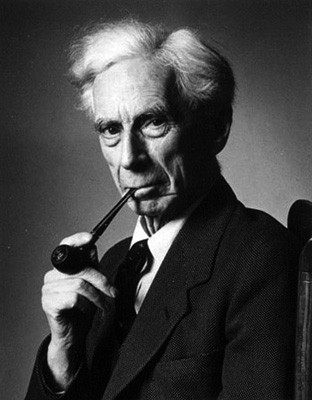
Bertrand Arthur William Russell was born on 18 May 1872. A British philosopher, logician, mathematician, historian, and social critic, he was one of the most wide-ranging intellectual figures of his century, rarely confining himself to a single discipline or register. By the late 1920s he was writing essayistic criticism on pressing social and political questions — fascism, communism, education, the shape of Western civilisation — building toward the sustained popular argument that would become his most widely read book.
In Praise of Idleness, published in 1935, collects essays composed between 1928 and 1933. The title piece, written in 1932, makes a direct and deliberately provocative case: that four hours of daily work is sufficient for any person, with the remaining hours freed for thought, conversation, and a fuller life. Around that central proposition, the book assembles broader arguments — on architecture and social planning, on the ancestry of fascism, on the case for socialism, on education and discipline, and on the relationship between stoicism and mental health.
Russell died on 2 February 1970, having lived to ninety-seven. The essays in In Praise of Idleness have remained in print. The argument on working hours — considered provocative in 1932 — found new audiences in later debates about shortened working weeks and the relationship between labour, leisure, and what a life well spent might look like. The book's wider character, its willingness to bring philosophy, economics, and social criticism together in plain prose, is the quality that has kept it circulating long after the circumstances that prompted it.
In Praise of Idleness
A philosopher's defence of leisure, rest, and the right to do nothing. Radical in 1932, more radical now.