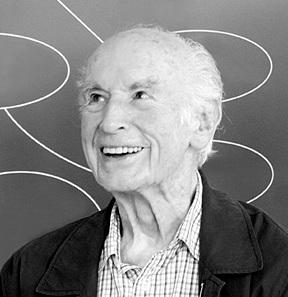
Albert Hofmann was born in Baden, Switzerland, the eldest child of a factory toolmaker. He attended the University of Zürich from 1926, working to support his family while pursuing his central interest: the chemistry of plants and animals. He graduated in 1929 and received his doctorate in chemistry in 1930. He joined the pharmaceutical-chemical department of Sandoz Laboratories in Basel — later to become Novartis — where the applied study of naturally occurring compounds became the focus of his career.
In 1938, Hofmann became the first scientist to synthesise lysergic acid diethylamide — LSD. Five years later, in 1943, he accidentally absorbed a small quantity through his fingertips and discovered its powerful psychoactive effects. That unplanned encounter set the direction for decades of research and, eventually, fierce cultural and legislative controversy. He also synthesised psilocybin, identifying it as the active compound in certain mushrooms used in indigenous Mexican ritual, following fieldwork in southern Mexico. He eventually became director of Sandoz's natural products department.
Hofmann maintained that LSD had legitimate therapeutic value in psychoanalysis, but was openly critical of its appropriation by the 1960s counterculture, a phenomenon he held partly responsible for the compound's prohibition. He set out his position in LSD: My Problem Child, and co-authored Plants of the Gods alongside ethnobotanist Richard Evans Schultes. The pharmacological groundwork he laid — isolating psychoactive substances from natural sources and characterising their effects — continues to underpin current clinical research into psychedelic-assisted treatment for depression, anxiety, and trauma.
Plants of the Gods
The classic ethnobotanical guide to psychoactive plants used in ritual and healing worldwide.